Is Nova Retro Anime Suitable for Digital Artists and Retro Game Developers?
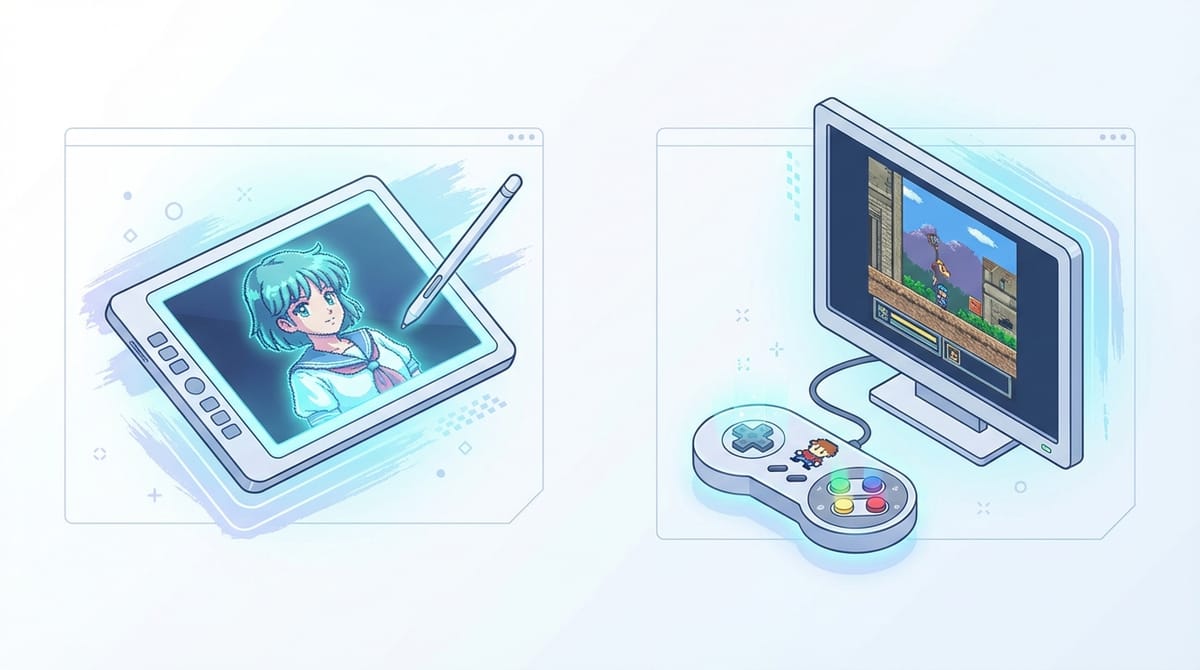
Digital artists and retro game developers often face a unique challenge: recreating the authentic, nostalgic aesthetic of the 1990s and early 2000s. This specific visual style requires distinct elements like cel-shading, limited color palettes, and subtle film grain, which can be incredibly time-consuming to replicate manually.
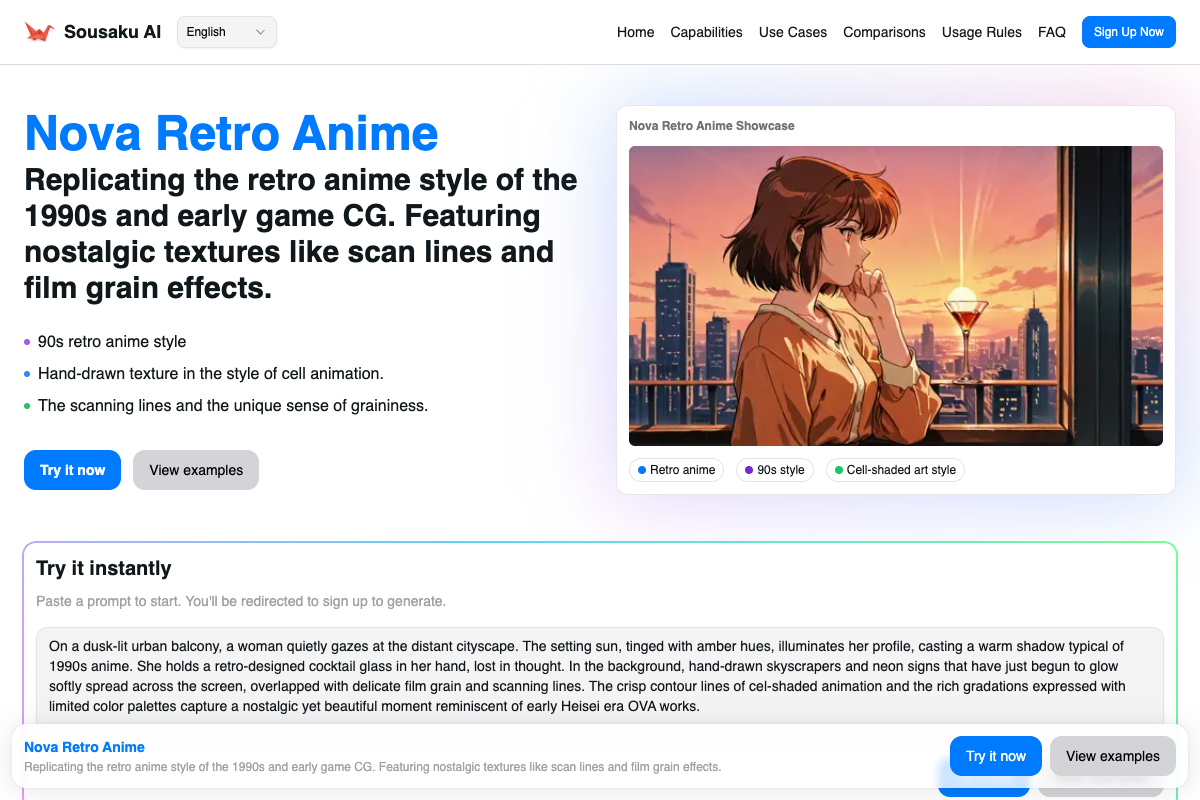
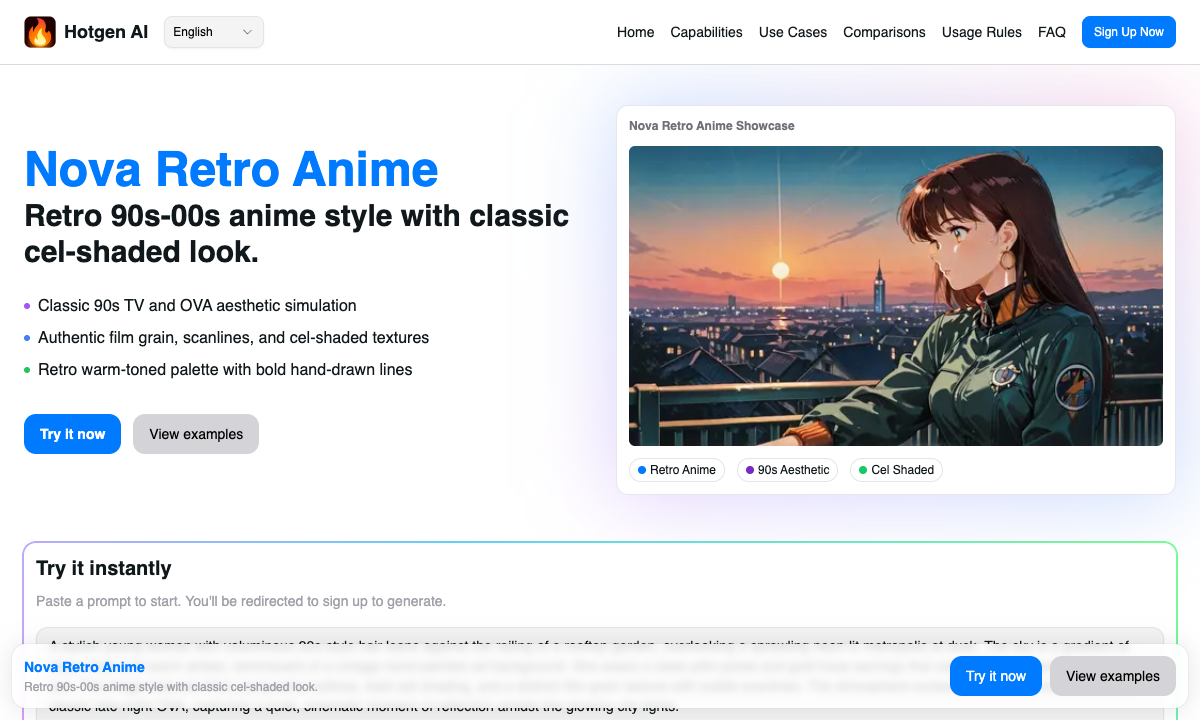
Nova Retro Anime is a specialized text-to-image model designed specifically to solve this problem. It accurately simulates the visual texture of classic TV anime, OVAs, and early game CG from the Showa and Heisei eras. For creators looking to build vintage visual novels or retro-inspired illustrations, this model offers a highly targeted solution.
You can access and run this model directly within the Hotgen.AI platform, streamlining your creative process without the need to manage multiple subscriptions.
Typical Creative or Workflow Needs of Digital Artists and Retro Game Developers
When working on nostalgic projects, digital artists and game developers aim to evoke a specific emotional response from their audience. Their core objective is to maintain strict stylistic consistency across character sprites, background art, and promotional materials.
These creators typically output assets for visual novels, lo-fi music videos, indie games, or conceptual illustrations. The challenge lies in avoiding the overly polished, hyper-detailed look of modern digital art.
Efficiency is a major concern. Manually adding scanlines, adjusting color separation, and drawing with the thick, powerful linework characteristic of 90s animation requires significant post-processing. Creators need a tool that natively understands and generates this aesthetic right out of the gate.
How Nova Retro Anime Meets the Needs of Digital Artists and Retro Game Developers
Nova Retro Anime eliminates the need for heavy post-processing by baking the 90s aesthetic directly into its generation process. The model naturally leans toward warm color tones and restricted color grading, perfectly mimicking the look of older animation cels.
It excels at generating the distinct visual artifacts of the era, such as scanlines, color block separation, and film grain. The linework produced by the model is noticeably thicker and more deliberate, capturing the hand-drawn cel-shaded feel of 90s mecha and bishoujo series.
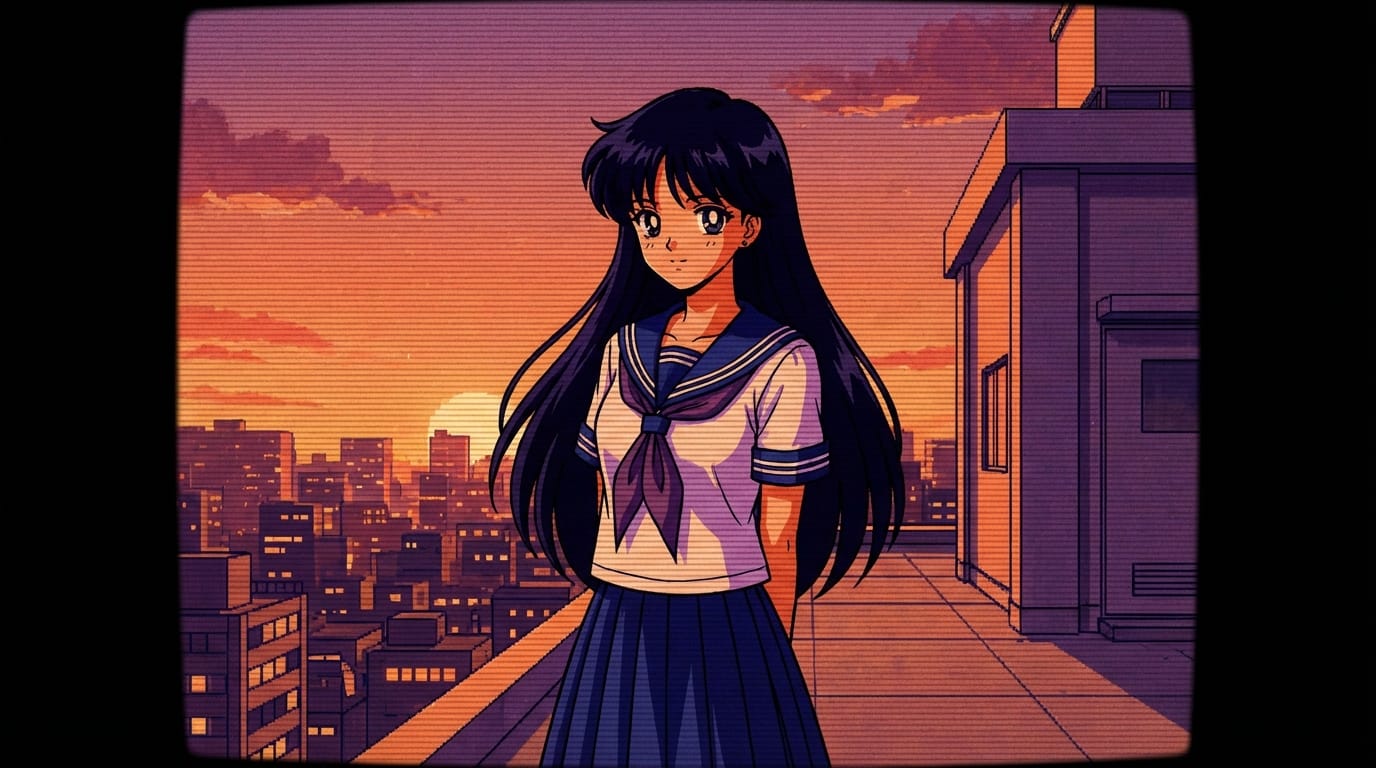
For a retro game developer needing a character sprite for a 90s-style dating sim, the model provides immediate, usable results. Here is an example of a prompt that yields excellent results for this specific use case:
1990s anime style, retro anime, a high school girl with long dark hair, wearing a classic sailor uniform, standing on a rooftop at sunset, warm lighting, cel-shaded, limited color palette, 90s visual novel sprite, subtle film grain, scanlines.
Common Use Cases of Nova Retro Anime for Digital Artists and Retro Game Developers
Because Nova Retro Anime is a dedicated text-to-image model, it fits seamlessly into the early stages of asset creation and conceptualization. Here are a few practical ways developers and artists utilize it.
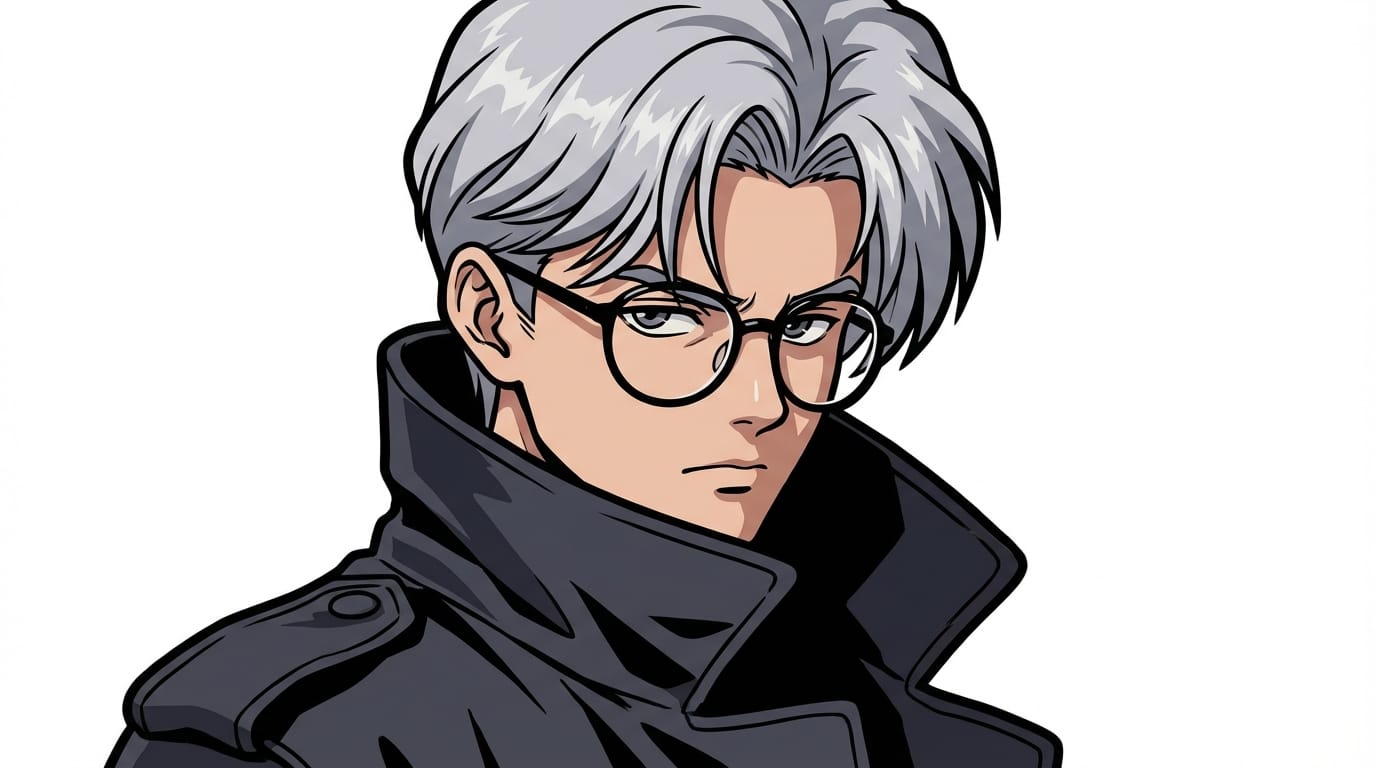
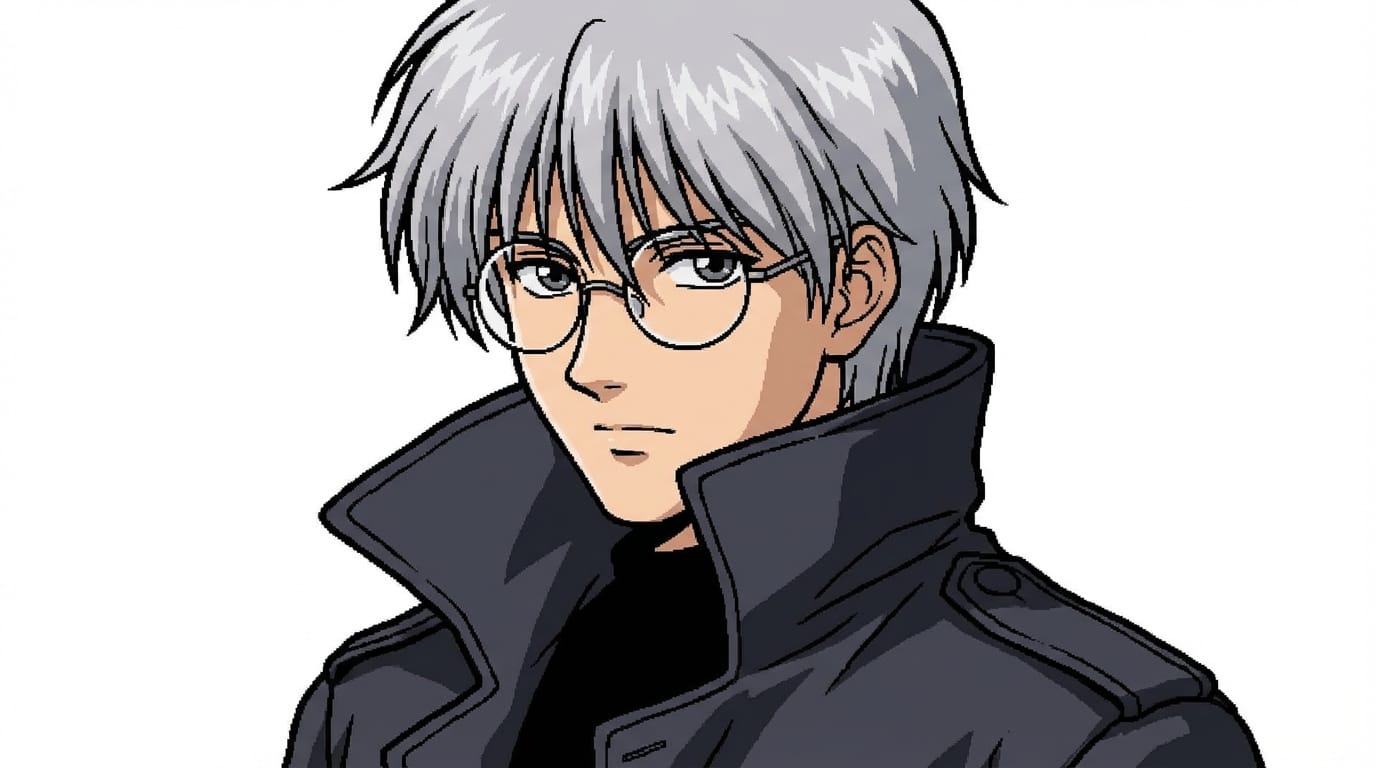
1. Generating 90s Visual Novel Character Sprites Indie developers creating retro dating sims or mystery visual novels use the model to generate character portraits. By keeping the prompts focused on the era's specific tropes, they can generate cohesive casts of characters quickly. You can easily test this workflow using the Text-to-Image tool.
Example Prompt:
1990s anime style, close-up portrait of a mysterious young man with silver hair and round glasses, wearing a dark trench coat, retro visual novel character sprite, cel-shaded, thick linework, flat colors, white background.
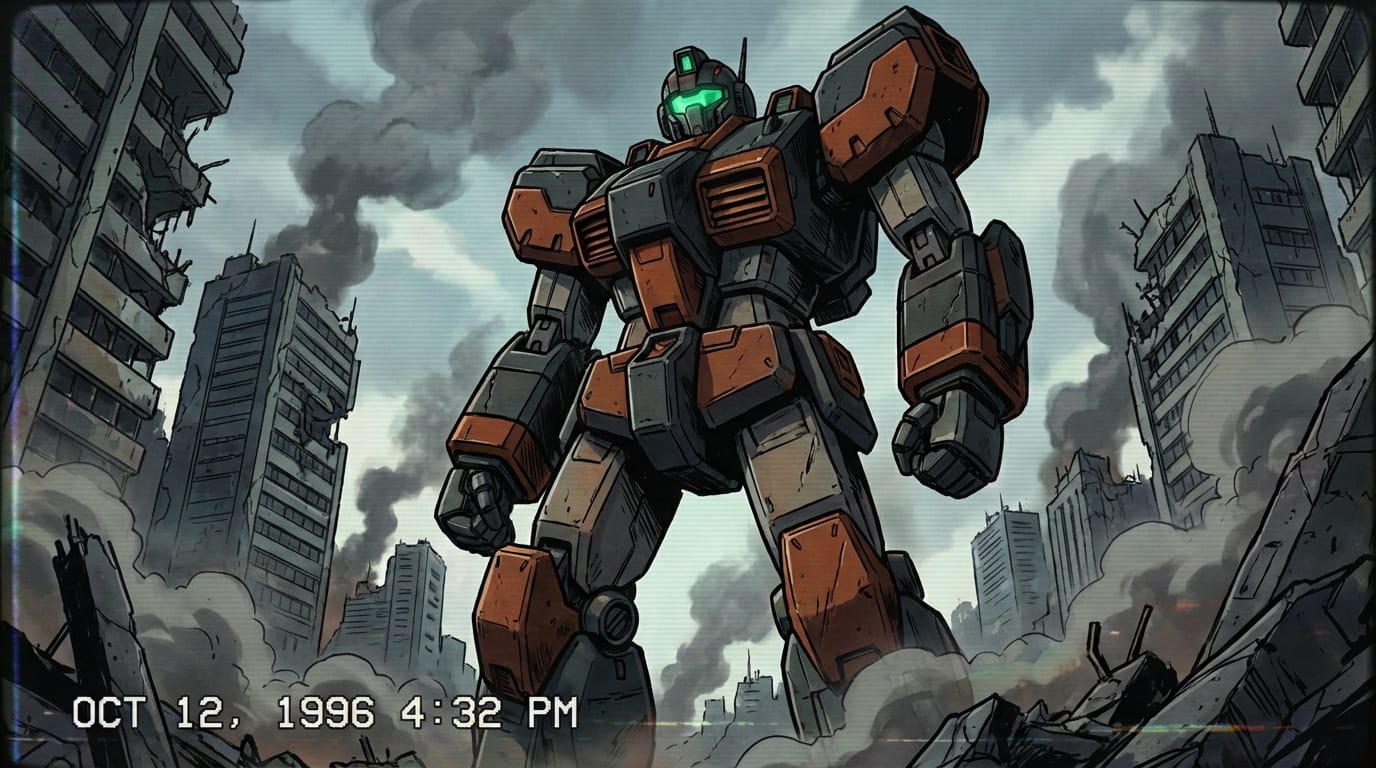
2. Conceptualizing Classic Mecha Anime Scenes Artists working on sci-fi projects often want to capture the raw, mechanical feel of 80s and 90s robot animations. Nova Retro Anime handles mechanical joints and retro-futuristic designs exceptionally well, providing a great base for concept art.
Example Prompt:
1990s mecha anime, an imposing giant robot with angular armor, standing in a ruined city, glowing green eyes, heavy shading, dramatic perspective, cel animation style, VHS aesthetic, scanlines.
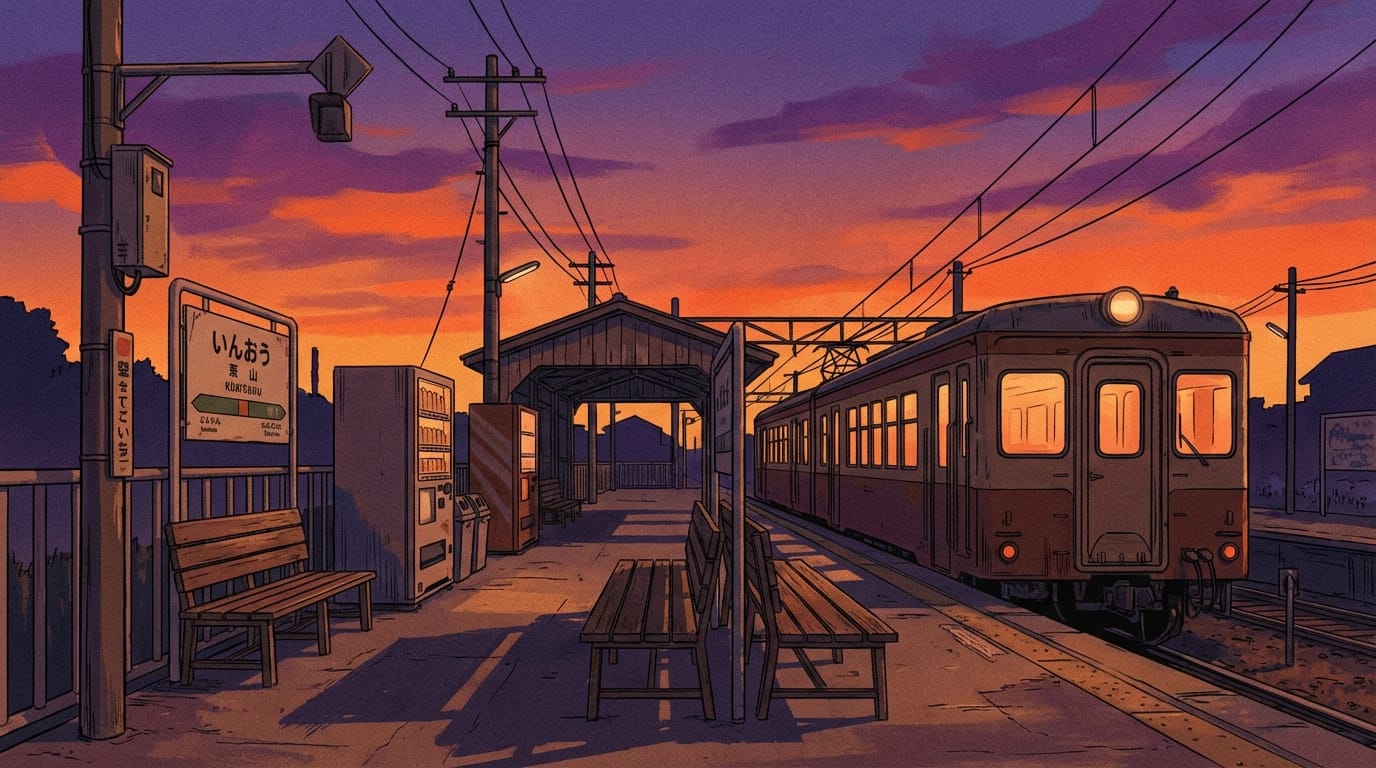
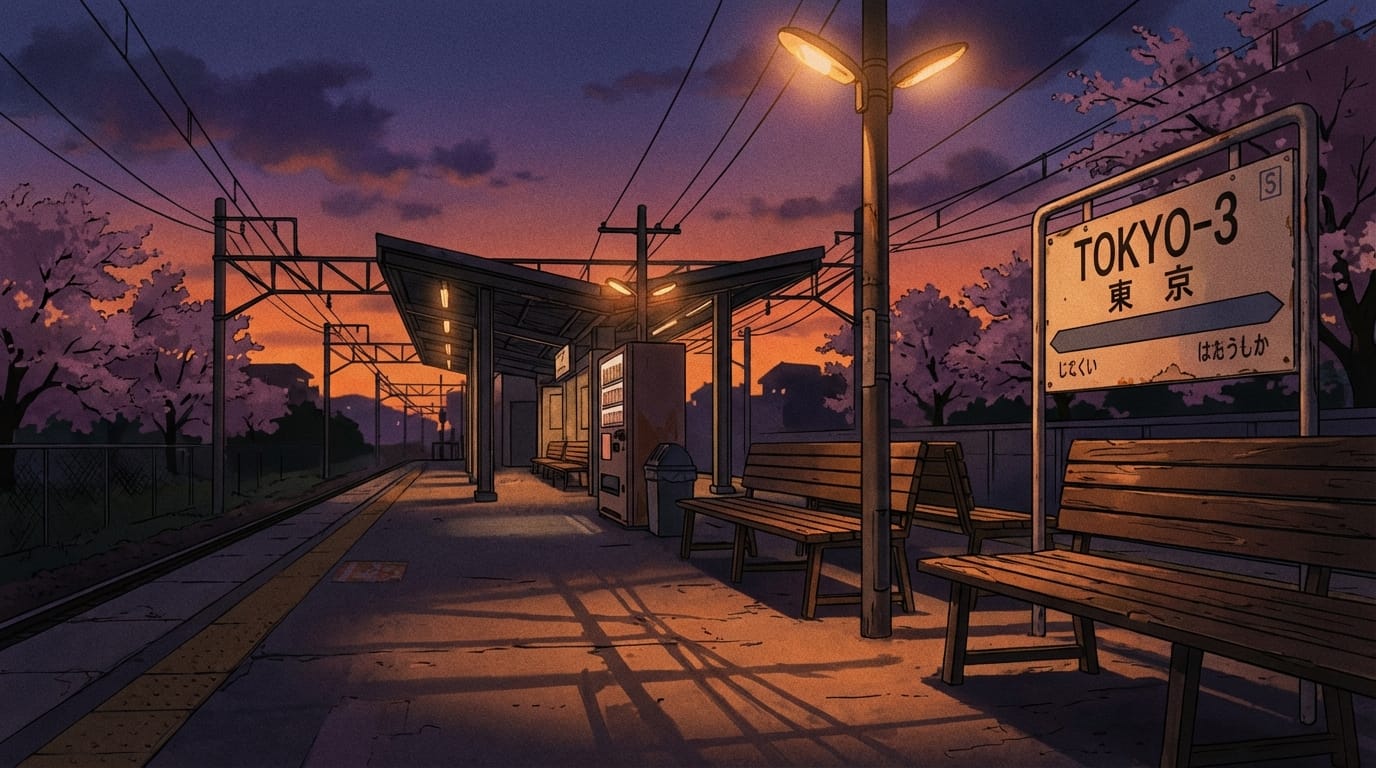
3. Creating Lo-Fi Music Video Backgrounds Animators and illustrators frequently need nostalgic, atmospheric backgrounds for lo-fi hip-hop tracks or retro urban legend videos. The model's warm tones and film grain make it ideal for generating moody, nostalgic scenery.
Example Prompt:
1990s retro anime, an empty Japanese train station at dusk, orange and purple sky, warm nostalgic lighting, limited color palette, early 2000s OVA background art, detailed shadows, film grain.
What Digital Artists and Retro Game Developers Should Keep in Mind When Using Nova Retro Anime
While Nova Retro Anime is highly effective for its specific niche, mastering it requires an understanding of era-specific prompting. Using modern anime terms like "intricate details" or "hyper-realistic lighting" will actively work against the model's strengths and dilute the retro aesthetic.
Cost control is also a factor during the iterative design process. Because Hotgen.AI uses a unified Credit system, you pay only for what you generate. It is advisable to run smaller batches initially to test your prompt's effectiveness before upscaling the final assets.
Consistency across multiple generations can sometimes be challenging with any text-to-image model. Developers creating a full game will likely need to use these generated images as highly accurate base layers, painting over them to ensure perfect character consistency across different poses.
Which Digital Artists and Retro Game Developers Should Avoid Nova Retro Anime
Creators working on modern, high-fidelity projects will find this model entirely unsuitable. If your workflow requires the glossy, hyper-detailed, and dynamically lit style of contemporary 2020s anime or Webtoons, Nova Retro Anime will feel restrictive and outdated.
Additionally, 3D game developers or artists looking for photorealistic concept art should look elsewhere. The model forces a flat, cel-shaded, and intentionally imperfect look that cannot be easily bypassed to create realistic textures or modern 3D rendering styles.
How to Efficiently Use Nova Retro Anime on Hotgen.AI
The primary advantage of using Nova Retro Anime on Hotgen.AI is the frictionless workflow. As an All-in-One AI Creative & Model Aggregation Platform, you can access this specific retro model alongside top-tier generalist models without ever switching accounts.
If you are unsure whether Nova Retro Anime is the exact fit for your current project, you can explore the Model Library to see all supported engines. This allows you to browse alternatives quickly if your project scope shifts.
For a more analytical approach, use the Model Compare feature. You can run the exact same retro prompt through Nova Retro Anime and a general model like Midjourney V7 simultaneously, allowing you to visually verify which engine produces the best asset for your game or illustration.
Conclusion: Is Nova Retro Anime Worth a Try for Digital Artists and Retro Game Developers?
Nova Retro Anime is an exceptionally focused tool that delivers exactly what it promises: the nostalgic, unpolished, and highly charming aesthetic of 90s and early 2000s Japanese animation. For digital artists and retro game developers operating in this niche, it is an invaluable asset that drastically cuts down on post-processing time.
If your project requires authentic scanlines, thick cel-shaded linework, and the warm atmosphere of classic OVAs, this model aligns perfectly with your workflow. It allows you to generate highly specific visual novel sprites and backgrounds with minimal friction.
To see how this model fits into your creative pipeline, visit Hotgen.AI. You can review the full capabilities of Nova Retro Anime and sign in to start creating your next retro-inspired project today.