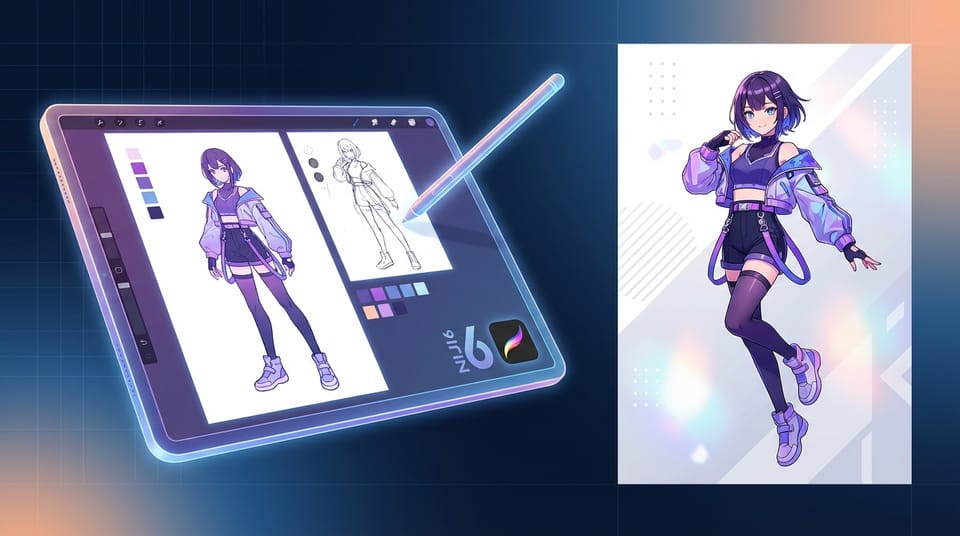
Is Midjourney NIJI 6 Suitable for Generating Plasticine Style Content?
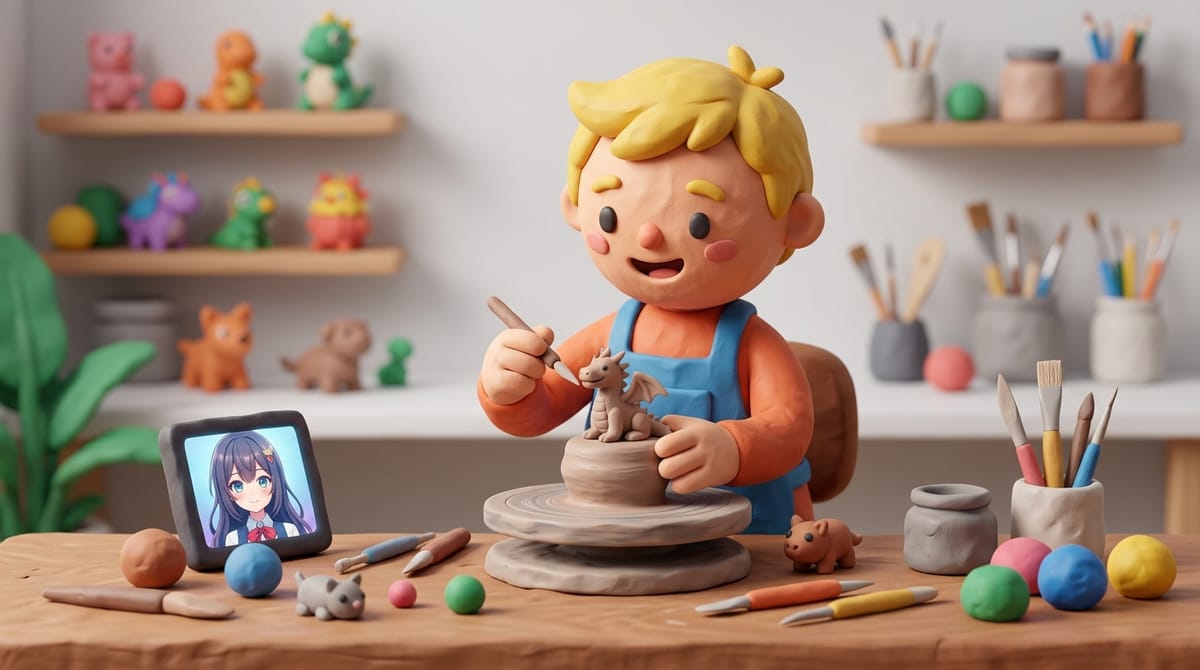
The Plasticine style is defined by its tactile, sculpted appearance, soft edges, and tangible physical textures reminiscent of traditional stop-motion animation. Midjourney NIJI 6, primarily known as an elite anime style ai model, might not seem like the obvious choice for generating 3D clay materials at first glance.
However, when properly prompted, Midjourney NIJI 6 is highly capable of creating a distinctive "anime-claymation" hybrid. It successfully applies the physical traits of plasticine to highly stylized Japanese aesthetics, resulting in visually striking, dimensional character designs. Creators can easily access this model and experiment with this specific visual fusion directly on the Hotgen.AI platform.
Typical Visual and Content Characteristics of the Plasticine Style
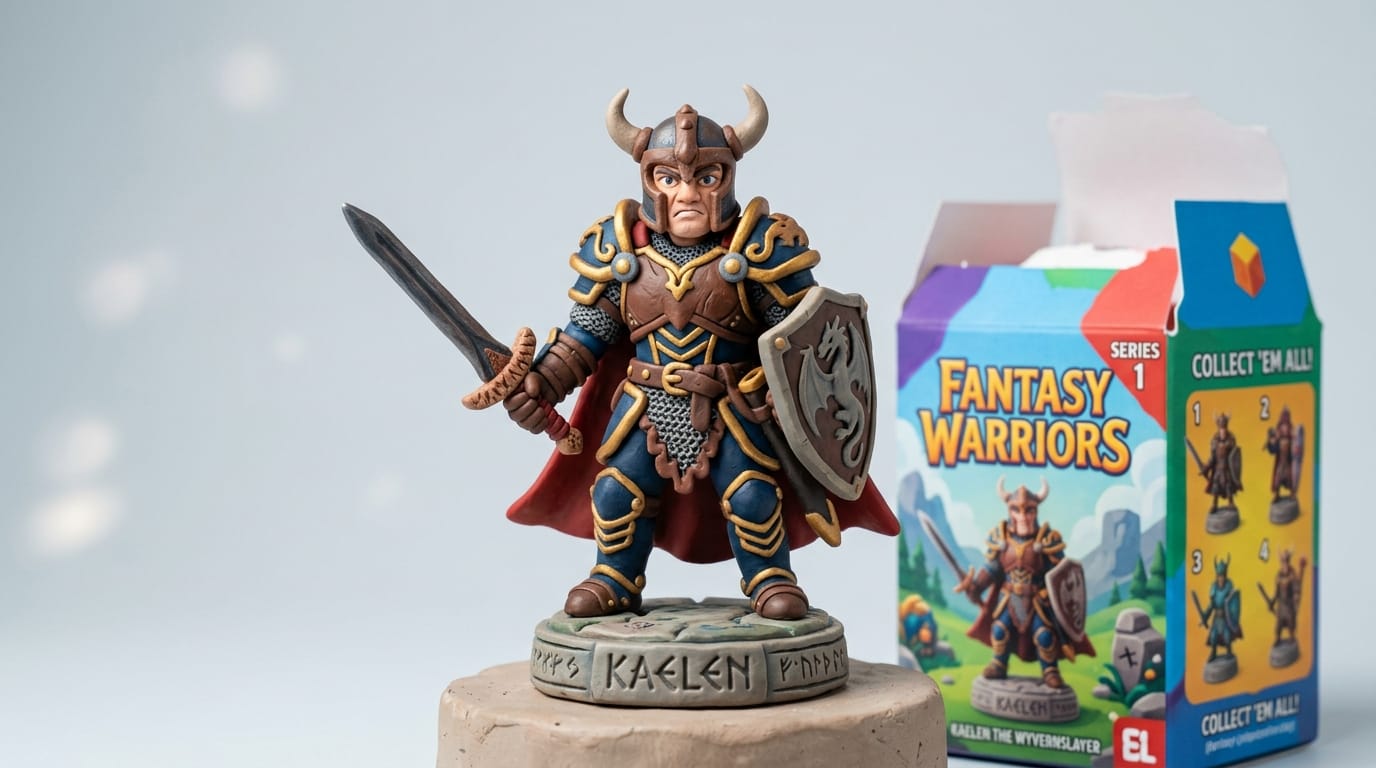
The visual foundation of the Plasticine style relies heavily on simulated physical properties rather than flat illustration. Key characteristics include visible material imperfections like subtle fingerprints, slight dents, and a matte, non-reflective surface finish. Lighting plays a crucial role, often mimicking studio setups used in macro photography to cast soft, grounded shadows that emphasize the 3D volume of the clay.
From a color perspective, this style favors vibrant yet slightly muted palettes, avoiding hyper-saturated digital gradients in favor of solid, mixed-pigment hues. The composition usually features a shallow depth of field, blurring the background to make the central "sculpted" subject pop out.
Emotionally, a Plasticine ai generator is expected to output content that feels nostalgic, whimsical, and handcrafted. The narrative tendency leans towards playful, approachable, and storytelling-driven imagery, making it highly effective for character-centric art rather than sweeping, complex landscapes.
Performance Analysis of Midjourney NIJI 6 in Plasticine Style
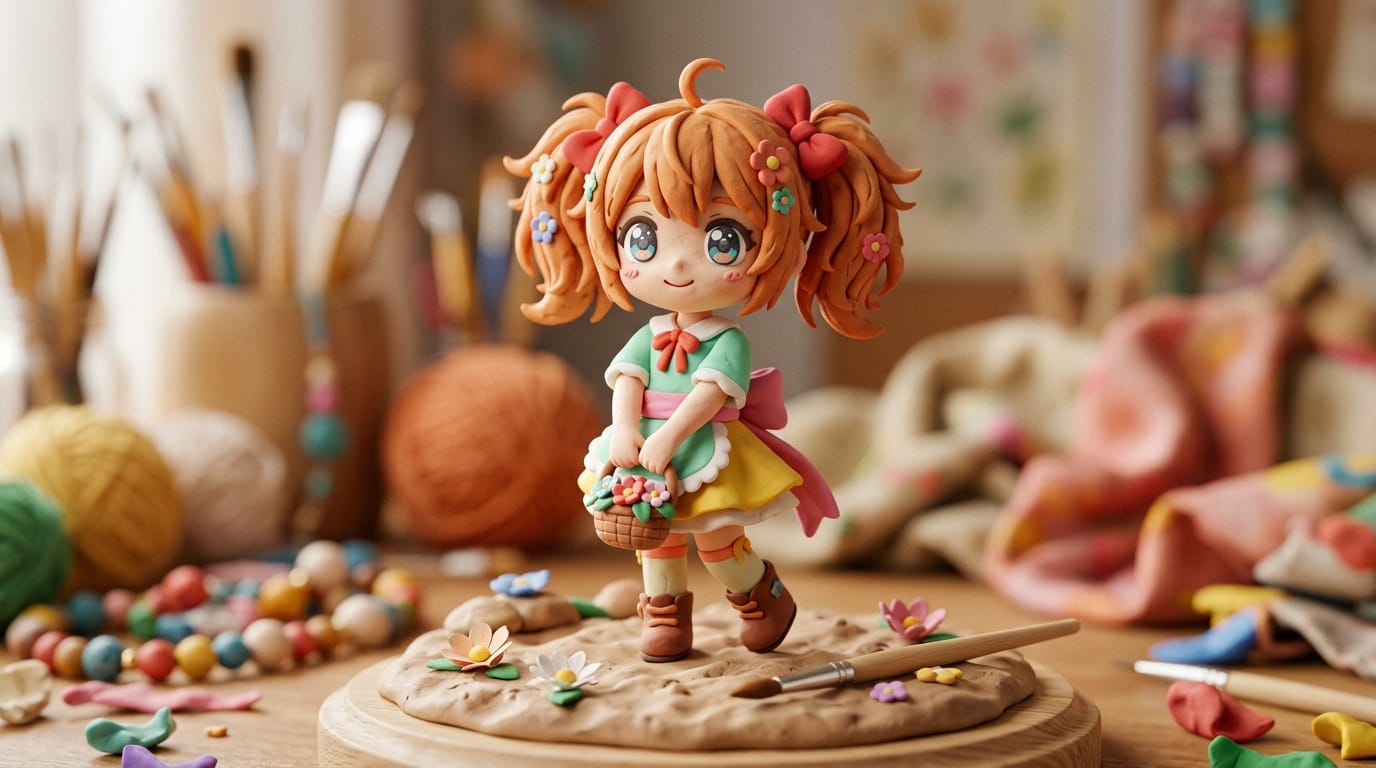
Midjourney NIJI 6 brings a unique flavor to the Plasticine aesthetic due to its inherent training on Eastern animation. When generating plasticine content, the model excels at maintaining anime proportions—such as expressive eyes and structured hair—while rendering them with convincing 3D clay textures. This creates a highly consistent and stylized output that stands apart from standard realistic 3D renders.
The model demonstrates excellent stability when handling character generation in this style, significantly reducing anatomical errors like hand or facial distortions compared to earlier versions. However, its performance is heavily dependent on precise prompting. Because NIJI 6 defaults to 2D flat shading, users must explicitly define the 3D and material constraints to override its primary anime tendencies.
If the prompt lacks strong texture keywords, the model may output a standard 2D illustration with slightly softer shading rather than true claymation. Therefore, while it is a powerful Plasticine ai model for character design, it requires a deliberate workflow to force the physical material properties into the frame.
Typical Scenarios for Generating Plasticine Content with Midjourney NIJI 6
The unique intersection of anime aesthetics and tactile clay textures opens up specific commercial and creative avenues. Here are the most effective use cases for this visual style:
- Art Toy and Blind Box Concepts: Designers use this style to prototype physical vinyl or clay figures, leveraging NIJI 6's strong grasp of character proportions and 3D rendering capabilities.
- Social Media Visuals: Brands and influencers utilize the playful, handcrafted look for avatars, post graphics, and engaging visual content that stops users from scrolling.
- Casual Game Assets: Indie game developers can generate consistent, stylized character sprites, UI elements, or promotional art that fits a cozy or puzzle-game atmosphere.
- Commercial Posters and Key Visuals: Marketing campaigns targeting younger demographics often adopt this style to appear approachable, creative, and distinct from standard corporate illustrations.
Prompt Writing Essentials for Plasticine Style (Based on Midjourney NIJI 6)
To effectively utilize Midjourney NIJI 6 for this aesthetic, your prompt structure must balance anime subject matter with strict 3D material instructions. The goal is to instruct the engine to build an anime character using clay rather than drawing them.
| Prompt Component | Recommended Keywords | Purpose |
|---|---|---|
| Material/Texture | plasticine, claymation, polymer clay, tactile |
Forces the model to abandon flat 2D coloring. |
| Lighting/Render | studio lighting, macro photography, Octane render |
Creates the necessary shadows to define 3D volume. |
| Style Modifiers | 3D anime style, stop-motion animation |
Blends the model's core strength with the target aesthetic. |
When writing prompts, actively avoid terms like sketch, line art, flat colors, or 2D illustration, as these will conflict with the desired 3D output.
Example Prompt for Midjourney NIJI 6:
A young wizard casting a spell, 3D anime style, made entirely of plasticine, tactile clay texture, visible fingerprints, macro photography, soft studio lighting, shallow depth of field, vibrant matte colors, stop-motion animation style, highly detailed --ar 16:9 --niji 6 --style raw
Common Ways to Generate Plasticine Style with Midjourney NIJI 6
Creators typically rely on two primary workflows to achieve this style, depending on whether they are starting from scratch or adapting existing concepts.
Text-to-Image Generation This is the most direct method. By inputting a highly descriptive prompt focusing on clay textures and lighting, creators can generate original concepts from a blank canvas. This approach is ideal for brainstorming and exploring new character designs. Access this workflow via Text-to-Image to start generating immediately.
Image-to-Image Generation For users who already have a 2D sketch or an existing anime illustration, Image-to-Image is highly effective. By uploading the reference image and applying plasticine-focused text prompts, the model acts as a stylistic filter, converting flat art into a 3D sculpted piece while preserving the original composition. Explore this technique through Image-to-Image.
Which Creators Are Suited to Use Midjourney NIJI 6 for Plasticine Style?
Independent illustrators and content creators will find this model particularly useful for developing unique personal brands or webcomic covers. The blend of Japanese aesthetics with tactile materials offers a fresh visual language that stands out in crowded digital spaces. It allows solo artists to achieve a 3D look without needing to learn complex modeling software like Blender or ZBrush.
For business and team users, such as marketing agencies or game studios, this model serves as a rapid prototyping tool. Art directors can quickly generate mood boards or concept art for campaigns that require a friendly, handcrafted aesthetic. The high consistency of NIJI 6 ensures that teams can reliably produce a series of assets that maintain a unified visual identity.
Explore More Plasticine Style Creation Methods on Hotgen.AI
While Midjourney NIJI 6 offers a fantastic anime-clay hybrid, different projects may require different visual nuances. A purely realistic or cinematic plasticine look might be better served by other engines. Hotgen.AI’s Multi-Model Aggregation allows you to seamlessly test various top-tier AI models without switching platforms.
You can browse the complete Model Library to discover other engines capable of 3D generation. To find the perfect fit for your specific project, use the Model Compare feature. This tool lets you run the exact same plasticine prompt across different models simultaneously, making it easy to evaluate texture quality, lighting, and style adherence side-by-side.
Conclusion: Is Midjourney NIJI 6 Suitable for Plasticine Style Creation?
Midjourney NIJI 6 is highly suitable for generating Plasticine style content, provided the creator is looking for a fusion of 3D clay textures and anime aesthetics. Its deep understanding of character design, vivid coloring, and clean composition translates beautifully into the realm of digital claymation.
Its primary advantage lies in producing expressive, stylized characters that feel both handcrafted and professionally designed. However, its boundary is clearly defined by its training: it is not the ideal choice for hyper-realistic, western-style stop-motion environments unless heavily manipulated. For creators seeking a charming, character-focused 3D style, it remains one of the most reliable tools available.
To test this unique visual style and see how your concepts translate into digital clay, visit Hotgen.AI and sign in to start your creation.